Zero waste needs
real evidence.
A short story about food waste in Türkiye's COP31 moment: from climate ambition to data that can be checked on the ground.
From promise to proof.
About a one-minute narration · browser voice
Narration uses your device's speech engine; duration and pronunciation depend on the available voice.
Full transcript
Türkiye has made Zero Waste a priority in its COP31 action agenda. But for food waste, separation alone is not the whole story. Can we verify the weight, quality, and destination of every collection? At COP28, the UAE announced the thirty-billion-dollar ALTÉRRA climate fund. That is an example of turning climate ambition into an implementation vehicle, not a valuation of Türkiye's waste programme. Atikova proposes a measurement and verification layer for organic waste: record weight and contamination at the source, produce auditable reports for businesses, and model biogas potential for recovery operators. We are pre-pilot. Our model is not a verified field result. The next step is a limited pilot in Istanbul, publishing what actually happens, even if it challenges our assumptions. Zero Waste becomes more meaningful when its outcomes can be measured.
Investor video
Atikova in two minutes
The problem, the solution, where we honestly stand, and what comes next. With voice-over (AI voice in English, Turkish or Persian) and subtitles — turn the sound on.
Sample city: Istanbul
About 18,000 tonnes of household waste a day, roughly half of it organic — and almost none collected separately. Every city has its own structure, so each needs its own policy mix. Researched with AI agents; every figure links to a public source.
No financial figures in the videos. Every number on screen names its source; images are AI illustrations and the voice is AI-generated. Not an offer of securities.
Investor presentation
Fifteen slides: the problem, the solution, where we stand today, the model, the plan and every source. Follows the language chosen above.
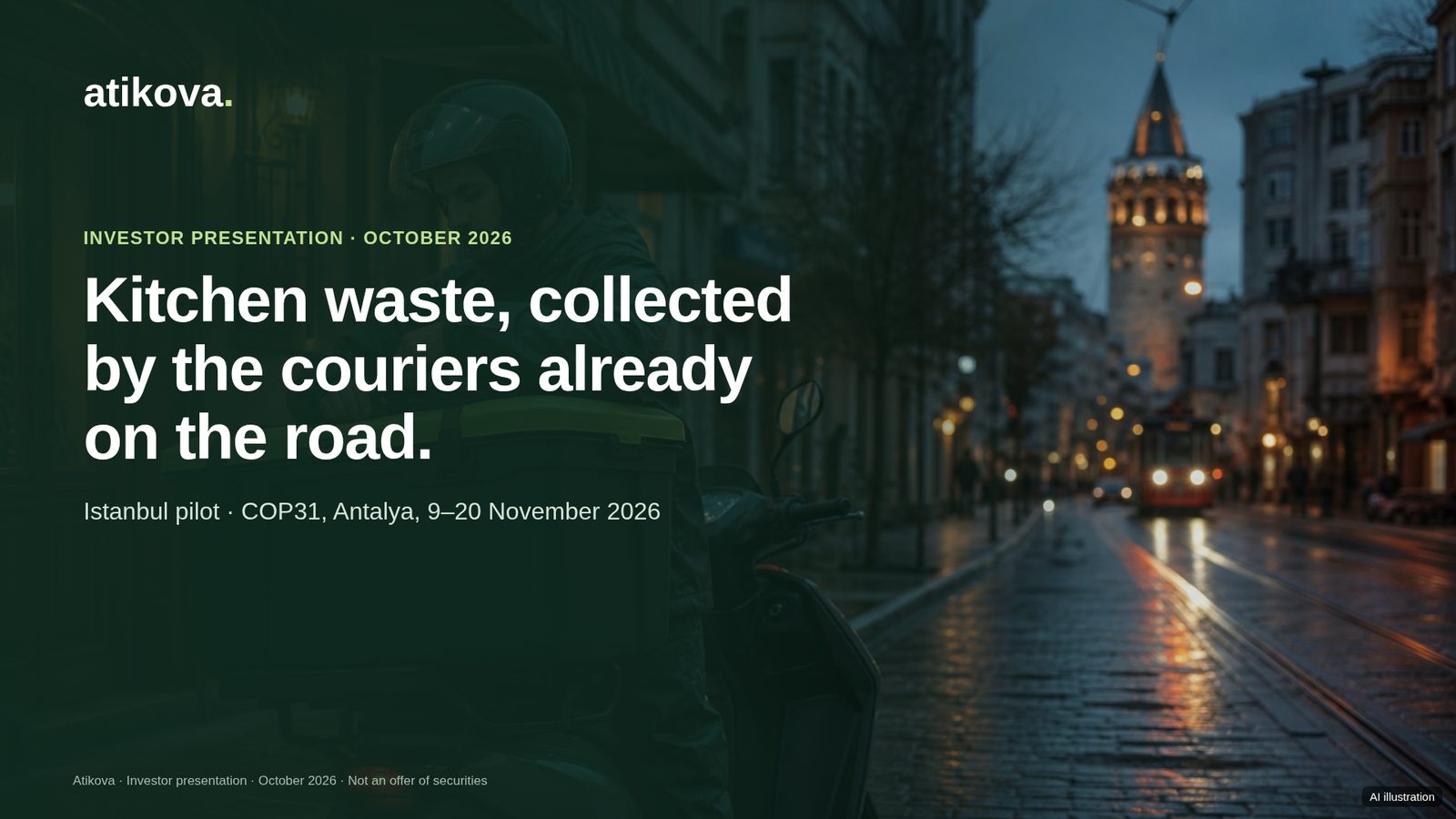
1 / 15 Kitchen waste, collected by the couriers already on the road.
This presentation is not an offer to sell or a solicitation to buy securities.
Waste, collected — the dispatch episode.
The same story the rest of this page tells, told about a different part of the platform: Atikova Collect, the two-sided pickup board for motorcycles, vans and apartment blocks. In three languages, with the script beside it and a link to the app.
Read from the script beside it; nothing in it goes beyond what the running board holds.
Transcript
English — 2:39
Municipal waste collection in Türkiye is free, and slow. Atikova Collect is the paid, same-day lane beside it. Here is how it works. A household, a shop, or a caretaker posts a pickup: what the load is, where it is, and how far it has to travel. The app answers with an estimate that states its own assumptions — base fee, distance, volume, and what the vehicle you chose can actually carry. Two vehicles, because there are two businesses here. A motorcycle courier for the small and the quick: sorted recyclables, electronic waste, a day of kitchen scraps. A van or a truck for the heavy and the bulky: a sofa, a fridge, three cubic metres of builder's rubble. A collector registers a vehicle and sees only the jobs that vehicle can carry. Dispatch refuses impossible matches, and it says which rule refused them. Rubble on a motorcycle is refused with a reason, not a shrug: construction debris is not carried by a bike. A van that cannot lift four hundred kilograms hears exactly that number. The motorcycle model has its own page, Atikova Moto, and two ways of working. On demand: one pickup at a time, the courier idea. Rounds: a planned circuit of doors in one district, packed per bike. The first bike takes what it can. The second opens a second load. Every stop that does not fit is refused with the number that refused it — one stop of a hundred and eighty litres does not fit a bike's hundred and fifty. And then there is the half of the city the courier model does not fit on its own. In the outer districts, a block of flats produces the same small bag from forty doors. Sending forty bikes is not a service, it is forty trips. So the unit is the building. A doorman says how many flats put a bag out. A bag is sixty litres. A bike carries two or three. A block of twenty flats is a round — one rider, several doors, one trip. Two operators register here, because both exist: the ordinary person with one motorbike, and the small firm with a few. A solo rider is a fleet of one. What this is not, it says plainly. There is no payment. No live tracking. No licence or insurance check. Those are gaps you can read in the app itself, not quiet omissions. Every number in this episode comes from the running board: the fare arithmetic, the refusal rules, the round planner. If you want to see it move, open collect.atikova.com.
فارسی — 3:21
جمعآوری زباله در شهرداری رایگان است، اما کند. آتیکوا کالکت خط پرداختی و همانروزیِ کنارش است. ماجرا اینطور کار میکند: یک خانه، یک مغازه یا یک سرایدار درخواست بارگیری میگذارد — چه باری است، کجاست، و چقدر باید جابهجا شود. اپ با برآوردی پاسخ میدهد که خودش فرضهایش را میگوید: کرایهٔ پایه، مسافت، حجم، و آنچه وسیلهٔ انتخابی واقعاً میتواند حمل کند. دو وسیله، چون اینجا دو کسبوکار جدا وجود دارد. پیک موتوری برای کوچک و سریع: بازیافتیهای تفکیکشده، پسماند الکترونیکی، یک روز پسماند آشپزخانه. وَن یا کامیونت برای سنگین و حجیم: یک مبل، یک یخچال، سه مترمکعب نخالهٔ ساختمانی. یک جمعکننده وسیلهاش را ثبت میکند و فقط کارهایی را میبیند که وسیلهاش میتواند حمل کند. دیسپچ تطبیقهای ناممکن را رد میکند و میگوید کدام قاعده ردش کرده. نخاله روی موتور با دلیل رد میشود، نه با شانهبالاانداختن: نخالهٔ ساختمانی با موتور حمل نمیشود. ونی که چهارصد کیلوگرم را بلند نمیکند، دقیقاً همان عدد را میشنود. مدل موتور صفحهٔ خودش را دارد، آتیکوا موتو، و دو روش کار. بر اساس تقاضا: هر بار یک بارگیری، همان ایدهٔ پیک. و دورها: مداری برنامهریزیشده از درها در یک ناحیه، چیدهشده بهازای هر موتور. موتور اول هرچه میتواند برمیدارد. موتور دوم بار دومی باز میکند. و هر توقفی که جا نمیشود، با همان عددی که ردش کرده فهرست میشود — یک توقف صد و هشتاد لیتری در صد و پنجاه لیتر موتور جا نمیشود. و بعد نیمی از شهر است که مدل پیک بهتنهایی به آن نمیخورد. در ناحیههای حومه، یک بلوک مسکونی همان کیسهٔ کوچک را از چهل در بیرون میدهد. فرستادن چهل موتور خدمت نیست، چهل سفر است. پس واحد، ساختمان است. نگهبان میگوید چند واحد کیسه بیرون میگذارد. هر کیسه شصت لیتر است. موتور دو یا سه تا میبرد. بلوک بیستواحدی یک دور میشود: یک راننده، چند در، یک سفر. دو نوع اپراتور اینجا ثبت میشوند، چون هر دو وجود دارند: آدم معمولی با یک موتور، و شرکت کوچک با چند تا. یک موتورسوار تنها، ناوگانی یکنفره است. و آنچه این اپ نیست را صریح میگوید: پرداخت نیست. ردیابی زنده نیست. بررسی گواهینامه و بیمه نیست. اینها شکافهایی هستند که در خود اپ میخوانید، نه چیزهایی که پنهان شده باشند. هر عددی که در این قسمت شنیدید از تختهٔ زندهٔ اپ آمده: حساب کرایه، قاعدههای رد، و پلنر دور. اگر میخواهید حرکتش را ببینید، آدرس collect.atikova.com را باز کنید.
Türkçe — 2:36
Belediye toplaması ücretsiz ve yavaş. Atikova Collect onun yanındaki ücretli, aynı gün hattı. Şöyle çalışır: bir hane, bir dükkân ya da bir kapıcı toplama talebi açar — yükün ne olduğunu, nerede olduğunu ve ne kadar yol gideceğini. Uygulama varsayımlarını kendi söyleyen bir tahminle yanıt verir: taban ücret, mesafe, hacim ve seçilen aracın gerçekte ne taşıyabildiği. İki araç, çünkü burada iki ayrı iş var. Küçük ve hızlı olan için motosikletli kurye: ayrıştırılmış geri dönüştürülebilirler, elektronik atık, bir günün mutfak atığı. Ağır ve hacimli için kamyonet ya da kamyon: bir kanepe, bir buzdolabı, üç metreküp inşaat molozu. Bir toplayıcı aracını kaydeder ve yalnızca o aracın taşıyabildiği işleri görür. Sevkiyat imkânsız eşleşmeleri reddeder ve hangi kuralın reddettiğini söyler. Motosiklette moloz bir gerekçeyle reddedilir: inşaat molozu motosikletle taşınmaz. Dört yüz kilogramı kaldıramayan bir kamyonet tam o sayıyı duyar. Motosiklet modelinin kendi sayfası var, Atikova Moto, ve iki çalışma biçimi. Anlık: her seferinde bir toplama, kurye fikri. Turlar: bir ilçede kapı kapı planlanmış bir tur, motosiklet başına paketlenmiş. İlk motosiklet taşıyabildiğini alır. İkincisi ikinci bir yük açar. Ve sığmayan her durak, onu reddeden sayıyla birlikte listelenir — yüz seksen litrelik bir durak, motosikletin yüz elli litresine sığmaz. Ve sonra şehrin, kurye modeline tek başına uymayan yarısı var. Dış ilçelerde bir apartman bloku, kırk kapıdan aynı küçük poşeti çıkarır. Kırk motosiklet göndermek hizmet değil, kırk yolculuktur. Bu yüzden birim, binadır. Kapıcı kaç dairenin poşet çıkardığını söyler. Bir poşet altmış litredir. Motosiklet iki ya da üç taşır. Yirmi daireli bir blok bir tur olur: bir sürücü, birkaç kapı, bir yolculuk. Burada iki tür işletme kaydolur, çünkü ikisi de var: tek motosikletli sıradan bir kişi ve birkaç motosikletli küçük firma. Tek başına bir sürücü, bir kişilik bir filodur. Ve bu uygulamanın ne olmadığını açıkça söylüyor: ödeme yok. Canlı takip yok. Ehliyet ve sigorta kontrolü yok. Bunlar uygulamanın içinde okuyabileceğiniz eksikler, sessizce atlanan şeyler değil. Bu bölümde duyduğunuz her sayı uygulamanın canlı panosundan: ücret hesabı, ret kuralları ve tur planlayıcısı. Hareket ettiğini görmek isterseniz collect.atikova.com adresini açın.
Video story.
Six animated scenes · approximately 60 seconds
Zero Waste at COP31
Türkiye has put Zero Waste on the COP31 climate action agenda as a priority theme.
ZERO WASTEVideo story
Record a silent, captioned WebM video. Podcast audio is not embedded in the video file. Browser recording support is required.
What is evidence, what is a proposal?.
COP31's Zero Waste priority and the ALTÉRRA announcement have sources. The 'measurement gap' is Atikova's hypothesis, not a quantified or field-proven system failure. We do not use an unsupported trillion-dollar valuation of Türkiye's programme.
Sources
These sources establish the public context; they do not verify Atikova's performance or imply official endorsement.
01COP31 Türkiye · Zero Waste Action Agenda02Reuters · UAE's $30bn ALTÉRRA fund at COP2803UNEP · Food Waste Index Report 2024real evidence.
Atikova · Checkable data for organic waste